
How to better hang art
I love art. I often joke that my tiny apartment here is more an art gallery than a home, because truth be told, I have more art pieces than furniture! The great thing about art is it so easily makes a house a home. Take two homes with identical pieces of furniture and wildly different art pieces, and you’ll see how much of a statement art can make.
While many people believe art collecting is an expensive hobby, you’ll be surprised at the number of beautiful and affordable pieces there are in the market. When buying art, I have only one golden rule: buy what you love.
Your home is a representation of you, and what you put on your walls should reflect that. Below I’ve outlined my top tips on how to properly hang art. I like to enlist the help of a handyman when hanging art, especially with arrangements requiring a more formal, symmetrical arrangement. It definitely isn’t a necessary spend, especially if you’re on a tight budget, but is much easier with two pairs of eyes.

The first thing I like to do is to assess the wall you’re working with, then mirror the size of the wall with your artwork. Have a narrow pillar? Hang a long, horizontal piece. Accentuating the height or length of the wall will make the room feel larger while highlighting the artwork on display.
Now learn from the galleries and hang your artwork at eye level. The standard gallery eye level height is about 147 centimetres, measured from the ground to the centre of the piece. However, determining eye level is always subjective: in kids’ rooms, for instance, art should be hung much lower.
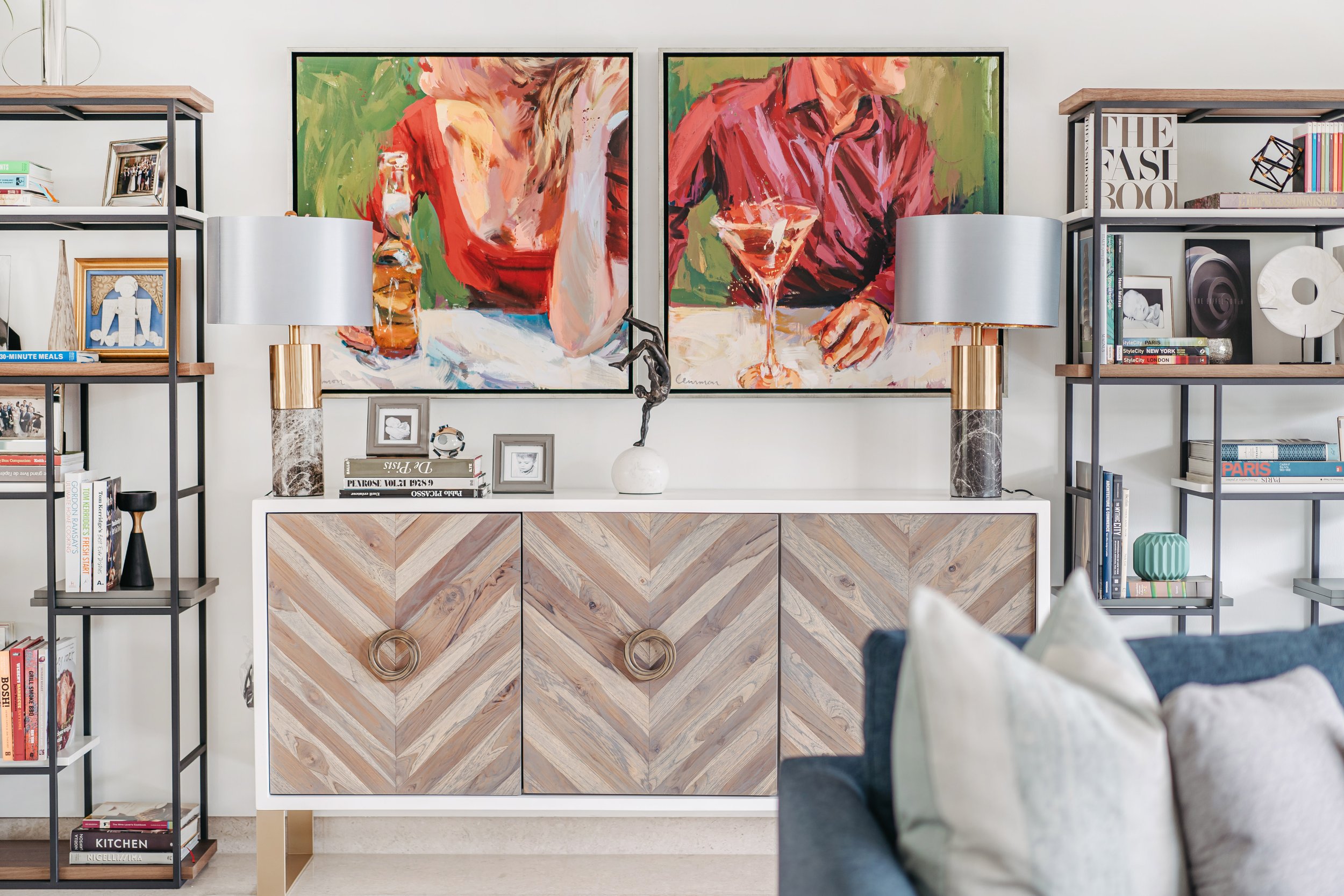
If you’re going the 147 -centimetre route, here’s a simple mathematical sequence to get your artwork hung in the right spot:
1. Measure the height of your artwork. Divide this number by two (Measurement A).
2. Measure the distance between the top of the frame and the wire on the back of the frame (Measurement B).
3. Measure 147 centimetres on the wall from the floor (Measurement C).
4. Position of the nail = Measurement A + Measurement C - Measurement B
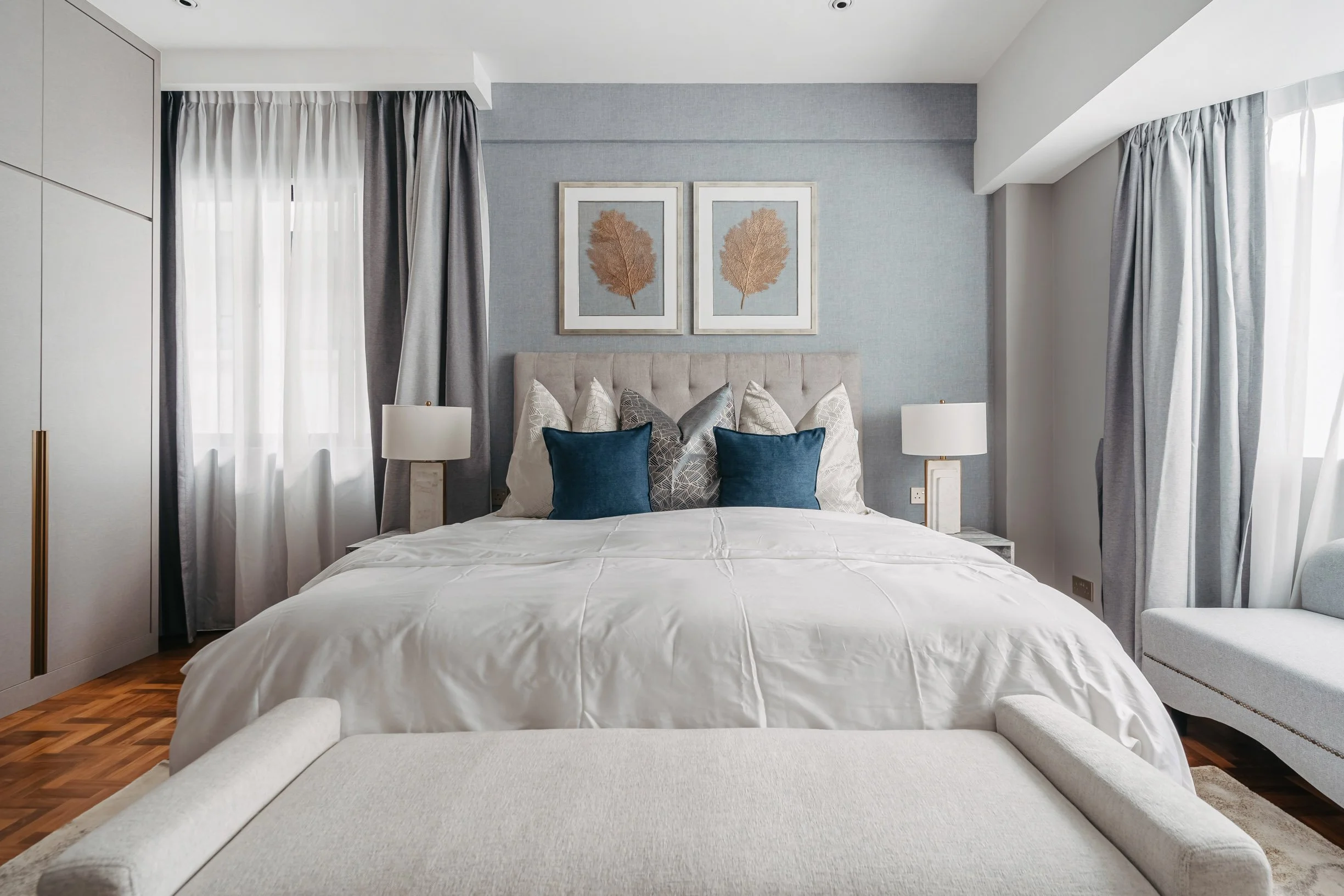
Occasionally and especially in smaller apartments, artwork may vie with furniture against the wall. This is an easy fix: simply position the bottom of the art piece about 15 to 30 centimetres above furniture, like we’ve done with this piece over the headboard.
Picking the right-sized artwork can be tricky with larger walls. I always like making a statement, and for art bigger is always better. If you can afford it, look for pieces that fill at least two-thirds, if not three-quarters of the wall.
Affordable luxury is my ethos, so I don’t believe in spending thousands on an art piece. My trick? Originals are great, but stretch canvases are bang on the money – these are what I use regularly in my projects.
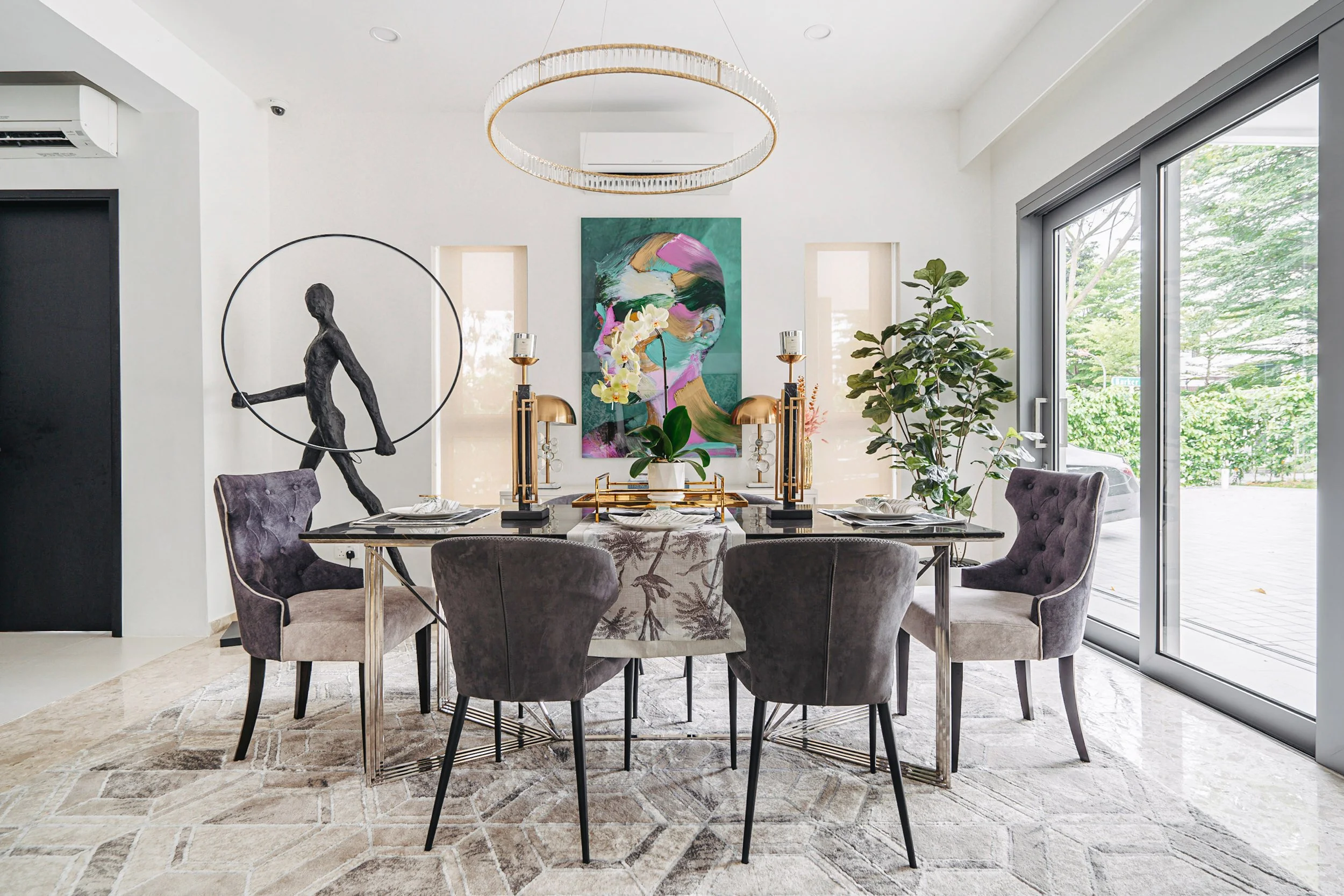
Here’s another thing about large-scale artwork: they help to keep your walls visually clean, thereby giving the illusion of a larger, airier space. When going large, I suggest you look for abstract pieces that add colour and visual interest to the room.
I especially love using more modern styles in formal homes as they provide much more visual contrast and interest. Let your artwork make a statement and don’t be afraid to choose pieces that clash with your furniture or architectural style.
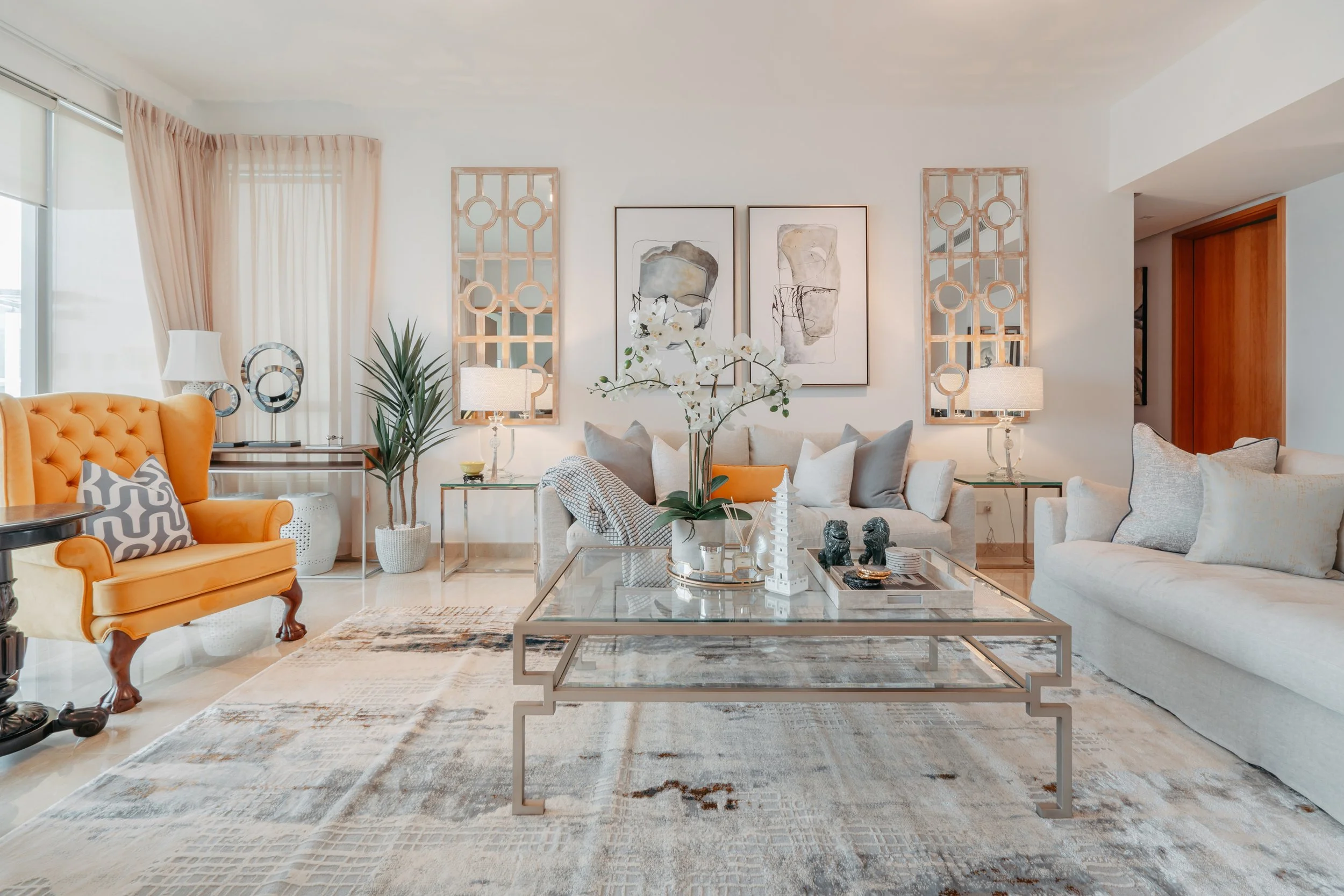
Formal, symmetrical arrangements are a great way of displaying art, as the arrangements are dramatic without detracting from the essence of the display: the art.
My personal preference when hanging art in a grid is to use black-and-white pieces, such as personal photographs. I like how the monotone colour palette keeps the arrangement more streamlined and elegant, but bear in mind an arrangement like this is also more formal. Make sure to keep gaps of 5 to 7 centimetres between pieces.
If you’re trying to downplay the formality, counteract the symmetrical arrangement with fun, colourful pieces, such as a series of vintage travel posters. The thing about hanging art this way is that you don’t have to invest in oversized pieces – standard prints will collectively make a statement.
